
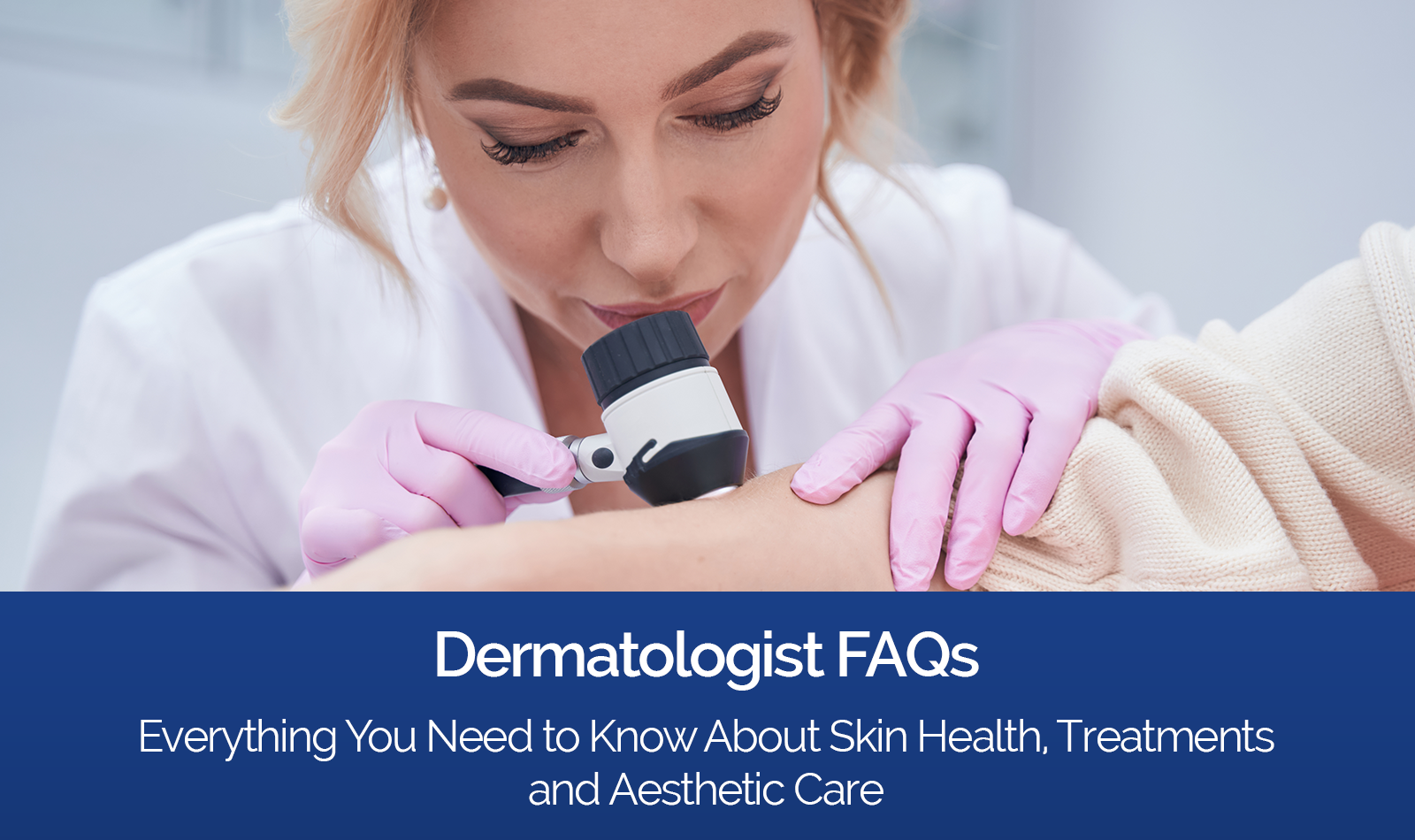
Skin issues are an essential part of everyday life. As an example, you have a breakout days before a big event, a spot of color might suddenly appear on your skin, or you might experience hair loss. Also, you might suffer from skin discoloration in patches. A lot of people turn to the internet for answers late at night and end up even more confounded than before. This guide brings together the most frequently asked questions by dermatologists in one spot. While focusing on skin care, the everyday routine, medical treatment, and aesthetic skin care, it answers through each section the real skin health queries in a straightforward manner and with clear directions.
Skin Health Basics
Q1. What defines healthy skin
Healthy skin shows even tone, steady hydration, minimal irritation, and a strong barrier. Texture feels smooth and comfortable through most days.
Q2. How often should skin cleansing happen
Cleansing twice daily supports skin health. Morning cleansing removes oil buildup. Evening cleansing removes dirt and sunscreen residue.
Q3. Does water intake affect skin health
Adequate hydration supports circulation and barrier function. Dryness often worsens during low fluid intake.
Q4. Which habits damage skin health most
Smoking, chronic sun exposure, poor sleep, and harsh products disrupt skin balance and speed aging signs.
Q5. Do weather changes affect skin condition
Seasonal shifts alter oil production and moisture levels. Winter increases dryness. Summer increases sweat and breakouts.
Q6. When should sunscreen use start
Daily sunscreen use begins in childhood and continues throughout life. Consistent use lowers pigmentation and premature aging risk. It also helps prevent sun tan.
Acne and Breakouts
Q7. What causes adult acne
Hormonal shifts, stress, occlusive skincare, and genetics trigger adult acne patterns.
Q8. Does diet affect acne severity
High glycemic foods and frequent dairy intake link with acne flares in several 2024 dermatology reviews.
Q9. Should acne lesions get popped
Manual popping raises scarring and infection risk. Professional extraction lowers damage risk.
Q10. How long acne treatment shows results
Visible improvement often appears after six to eight weeks of regular skincare treatments.
Q11. Do acne scars fade naturally
Mild marks fade over time. Deep acne scars need dermatologist guided procedures.
Q12. Does sunscreen worsen acne
Non comedogenic formulas protect skin without clogging pores.
Pigmentation and Uneven Tone
Q13. What triggers facial pigmentation
Sun exposure, hormones, inflammation, and genetics influence pigment activity.
Q14. Does melasma fade without treatment
Melasma often persists without structured treatment and sun protection.
Q15. Which treatments address pigmentation
Chemical peels, topical actives, and laser sessions support pigment control.
Q16. Does exfoliation help dark spots
Controlled exfoliation speeds cell turnover and improves tone when done under guidance.
Q17. How long pigment treatments last
Maintenance care after pigment treatment and consistent sunscreen use help preserve results long term.
Q18. Do home remedies help pigmentation
Unregulated remedies raise irritation risk and worsen discoloration.
Hair and Scalp Health
Q19. What causes hair thinning
Hormonal changes, nutritional gaps, stress, and genetics contribute to hair loss patterns.
Q20. How often should scalp cleansing happen
Scalp cleansing frequency depends on oil production and lifestyle. Most benefit from two to three washes weekly.
Q21. Does dandruff signal hair loss
Untreated dandruff worsens scalp inflammation and shedding.
Q22. Which treatments support hair regrowth
Topical therapies, oral supplements, and procedural hair regrowth treatment support regrowth plans.
Q23. Does oiling help scalp health
Light oiling supports moisture balance when followed by proper cleansing.
Q24. When should hair loss evaluation start
Noticeable thinning lasting over three months needs dermatologist review.
Anti Aging and Aesthetic Skincare
Q25. What causes early aging signs
Sun damage, smoking, stress, and poor skincare habits accelerate aging.
Q26. Do injectables look natural
Expert placement maintains facial balance and expression.
Q27. When should aesthetic care begin
Preventive care often starts in late twenties with skincare focused plans.
Q28. Are lasers safe for brown skin
Modern devices with correct settings suit diverse skin tones.
Q29. How long aesthetic treatments last
Duration varies by procedure, skin type, and aftercare consistency.
Q30. Does skincare replace procedures
Topicals support skin health while procedures target deeper concerns.
Sensitive Skin and Allergies
Q31. What defines sensitive skin
Frequent redness, stinging, or burning signals barrier weakness.
Q32. How should sensitive skin get cleansed
Gentle cleansers without fragrance reduce irritation risk.
Q33. Does makeup worsen sensitivity
Heavy formulas and expired products worsen reactions.
Q34. Should patch testing happen
Patch testing prevents full face reactions and guides product choice.
Q35. Does stress affect sensitivity
Stress alters immune response and increases flare frequency.
Pediatric and Teen Skin
Q36. When acne care should start for teens
Early care prevents scarring and emotional stress.
Q37. Are adult products safe for teens
Age appropriate formulations reduce irritation risk.
Q38. Does screen time affect teen skin
Extended screen exposure links with eye strain and disrupted sleep patterns affecting skin.
Q39. Should teens use sunscreen daily
Daily use protects developing skin from long term damage.
Q40. Do children need dermatologist visits
Chronic rashes or birthmarks need evaluation.
Body Skin and Nails
Q41. Why body skin feels dry
Hot showers, harsh soaps, and low humidity reduce moisture.
Q42. Does nail health reflect skin health
Brittle nails signal nutritional or systemic issues.
Q43. How to manage cracked heels
Regular moisturization and keratolytic care restore softness.
Q44. Does waxing damage skin
Incorrect technique raises pigmentation and irritation risk.
Q45. When body moles need review
Change in size, color, or shape signals need for assessment.
Procedural Dermatology
Q46. Are chemical peels painful
Mild tingling occurs during application and resolves quickly.
Q47. How often peels happen
Frequency depends on peel depth and skin response.
Q48. Do procedures need downtime
Some treatments allow same day routine while others need rest days.
Q49. Does maintenance matter
Regular follow up sustains results and skin health.
Q50. How to choose a dermatologist
Board certification, experience, and patient education matter.
About Dr Fehmida and Patient Focused Dermatology
Dr Fehmida promotes evidence based dermatology with emphasis on skin health, safety, and realistic outcomes. Clinical practice blends medical dermatology, aesthetic skincare, and long term care planning. Patient education remains central to treatment planning. Consultations focus on diagnosis clarity, treatment timelines, and skin behavior understanding. Fore more details and booking visit out Dermatology Clinic Website.