
Contents
- 1 What Is Acne and Why It Happens
- 2 How Acne Develops: From Mild to Severe
- 3 Symptoms and Signs of Acne
- 4 Acne Risk Factors
- 5 When to Seek Professional Acne Treatment
- 6 Common Acne Treatment Paths
- 7 Scars and Marks: Addressing Long-Term Effects
- 8 Overview Of Acne Grades and Typical Treatments
- 9 Choosing an Acne Clinic in Karachi
- 10 What to Expect at Your First Dermatologist Visit
- 11 Home Care and Daily Routine Tips
- 12 Nutrition and Acne: What Science Shows
- 13 Dr Fehmida: Expert Acne Care Approach
- 14 Costs and Practical Considerations
- 15 Common Myths and Misunderstandings
- 16 Acne and Confidence: Emotional Impact
- 17 Bottom Line
- 18 FAQs
Acne is a skin problem that influences many people regardless of their age. You can see the manifestations of acne in different forms such as pimples, blackheads, whiteheads, or even painful cysts. Some days you feel discomfort over appearance. Other days the same concerns regarding the scars which remain after the breakout fades might raise on other days. Acne is a common condition. Nevertheless, the successful acne treatment in Karachi is based on the right identification of skin triggers, the understanding of the acne life cycle, and the selection of treatment avenues that promise consistent improvement.
Through this guide, you will get a good knowledge of acne causes, acne grades, and criteria for dermatologic diagnosis and treatment of acne cases. Also included are the medical acne treatment options available in Pakistan and information on how to select the right acne clinic in Karachi according to your needs.
What Is Acne and Why It Happens
Acne forms when pores become blocked with oil, dead skin, and bacteria. Each pore connects to a hair follicle. The sebaceous gland produces oil to lubricate skin. When oil production increases or shedding of skin cells changes, blockages occur. Bacteria then grow in these blockages. Inflammation appears as swelling, redness, and bumps.
Several factors influence acne formation. Hormonal changes influence oil production. Stress alters skin response. Diet and environmental conditions affect pore balance. Genetic traits influence how your skin handles oil and bacteria.
When acne appears repeatedly or severely, simple washes rarely resolve it. Professional assessment supports tailored acne treatment in Karachi.
How Acne Develops: From Mild to Severe
Acne progresses through stages or grades. Each grade guides treatment choice and intensity.
Grade 1 includes occasional whiteheads or blackheads without inflammation. Mild acne appears mostly on the face.
Grade 2 shows inflamed pimples with redness. More frequent breakouts appear across cheeks, forehead, and chin.
Grade 3 involves numerous inflamed bumps. Some nodules form. Mild discomfort appears with expansion.
Grade 4 includes large, painful nodules and cysts. Breakouts spread beyond the face to back and chest. This grade requires professional care without delay.
Understanding your acne grade helps you choose suitable medical acne treatment Pakistan rather than random skincare products.
Symptoms and Signs of Acne
Most acne shows these signs.
- Open pores filled with a dark surface cause blackheads.
- Closed pores filled with white oil pockets cause whiteheads.
- Inflamed pimples look red and raised.
- Sensitive and painful bumps appear deeper under skin.
- Scarring appears after prolonged inflammation or popping.
Acne scars differ. Ice pick scars are small pits. Boxcar scars are wider grooves. Rolling scars feel wavelike.
Your dermatologist for acne notes these details during assessment.
Acne Risk Factors
Age range from teens to adults influences acne risk. Hormonal shifts during puberty or menstrual cycles influence oil production.
Stress affects immune response and oil balance. Night routines and pillow cleanliness influence bacteria contact. Diet patterns such as high sugar foods influence the inflammation response in some people.
Environmental factors in Karachi like humidity, air quality, and heat often increase oil production and block pores. This explains why many seek acne clinic Karachi services for targeted support.
When to Seek Professional Acne Treatment
- If breakouts are frequent and persistent.
- If pain or inflammation increases.
- If acne scars appear or you are concerned about marks.
- If over the counter products fail after consistent use.
- If breakouts affect confidence and routine.
A dermatologist for acne reviews history, skin type, and prior attempts. They create a treatment plan with clear steps.
Common Acne Treatment Paths
Cleansing and Topical Care
Dermatologists often start with gentle cleansing tailored to your skin. Topical treatments include medicated gels or creams that reduce oil production and bacteria.
Retinoids help unclog pores. Benzoyl compounds reduce bacteria levels. Certain acids help exfoliate dead cells.
Consistency matters. Using powerful products incorrectly often irritates skin. Your dermatologist helps you build a routine that balances improvement and tolerance.
Oral Medications
For moderate to severe acne, oral medications help reduce inflammation and oil production. Some medicines target bacteria. Others influence internal factors that affect breakouts.
Oral treatments demand monitoring because they affect your body system. Your dermatologist for acne explains benefits and potential side effects clearly.
In Clinic Procedures
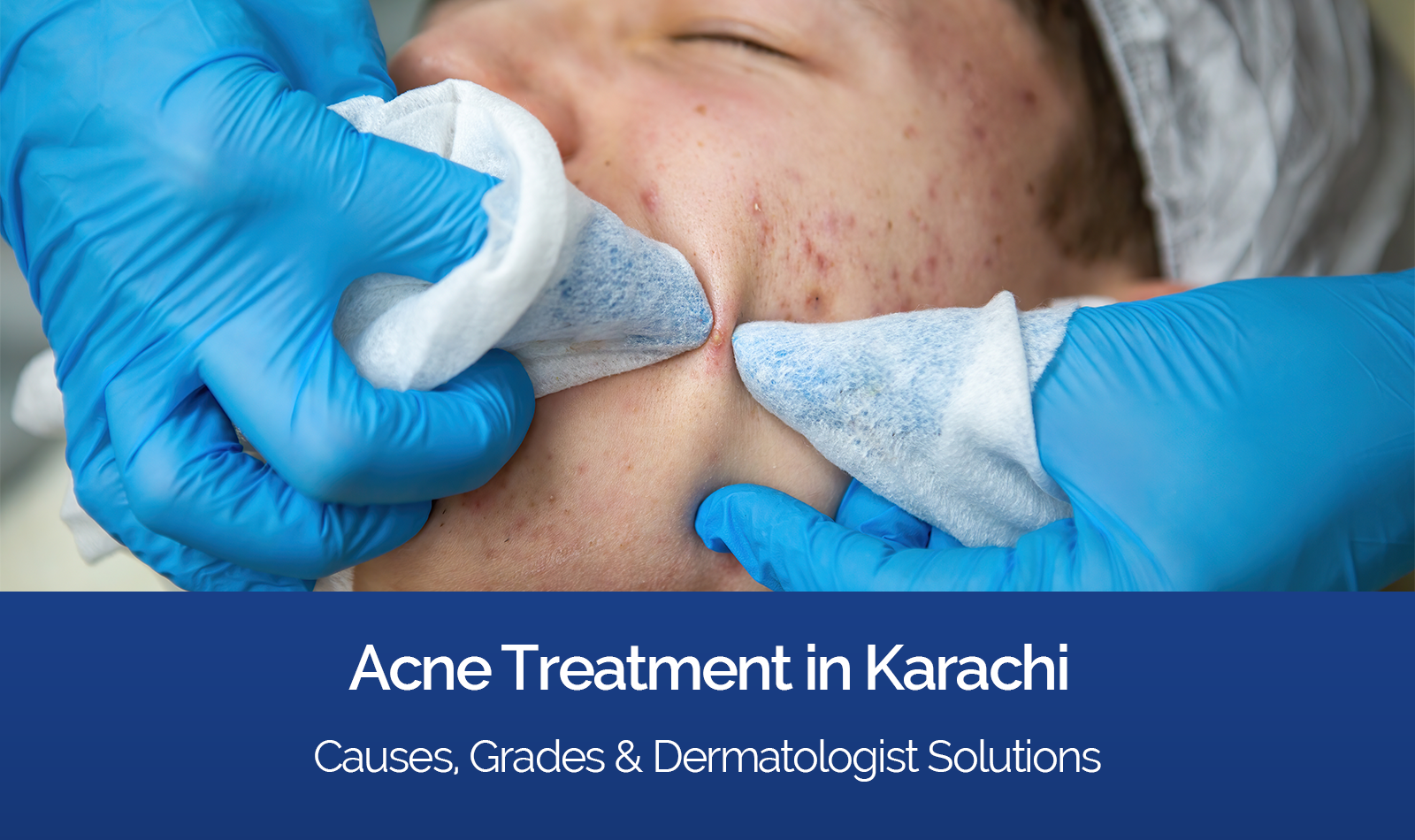
Procedures at acne clinic Karachi include extractions, chemical peels, and light based therapies.
Extractions remove stubborn blockages under professional technique.
Peels use controlled materials to exfoliate the surface and encourage cell turnover.
Light therapies target harmful bacteria and inflammation to calm breakouts.
Procedures support faster improvement when used with proper routine and prescribed products.
Scars and Marks: Addressing Long-Term Effects
Acne scars do not fade overnight. Scar treatment requires targeted approaches.
- Microneedling helps improve texture by stimulating regeneration.
- Laser therapies focus on deeper scar layers.
- Filler support improves depression scars by raising them to skin level.
A dermatologist assesses scar type and recommends sequential steps. Scars vary by depth and form, so choosing the right path prevents mismatched results.
Overview Of Acne Grades and Typical Treatments
| Grade | Symptoms | Typical Treatments |
| Grade 1 | Occasional non inflamed spots | Topical agents, routine cleansing |
| Grade 2 | Frequent inflamed pimples | Topical and mild oral treatment |
| Grade 3 | Widespread inflammation | Oral meds, peels, light therapy |
| Grade 4 | Severe nodules and cysts | Specialist oral meds and procedures |
This table helps you see how acne severity aligns with common treatment types.
Choosing an Acne Clinic in Karachi
Selecting the right acne clinic Karachi influences results. Look for clinics where professionals assess your skin before prescriptions. Avoid clinics that focus on quick fixes without a clear explanation of steps and expected outcomes. Your treatment plan should include timelines, expected reactions, and steps to prevent scars.
A good clinic maintains hygiene, listens to your history, and adjusts routines based on response rather than repeating the same products.
In Pakistan, many dermatology clinics offer acne care. Your choice improves when you compare qualifications, review real outcomes, and confirm a plan that matches your grade of acne.
What to Expect at Your First Dermatologist Visit
Your dermatologist for acne starts by asking about your breakout history and prior treatments. They examine your skin under proper lighting and may use tools to see inflammation below the surface.
Expect questions about diet, routines, and stress patterns. This helps reveal triggers. A tailored plan emerges from this structured assessment rather than a generic prescription.
Your dermatologist explains each component, how long before you see improvement, and what reactions might appear early in treatment. Honest timelines prevent frustration.
Home Care and Daily Routine Tips
While professional guidance is central, daily habits support improvement.
- Cleanse with recommended products morning and evening.
- Use non oil based hydration products.
- Avoid picking or popping pimples to reduce scarring risk.
- Keep pillow covers clean.
- Limit heavy makeup during active breakouts.
- Apply sunscreen appropriate for acne prone skin.
Your dermatologist for acne can recommend suitable products that do not interfere with treatment.
Nutrition and Acne: What Science Shows
Recent 2024 and 2025 studies link high glycemic foods with increased inflammation. Foods with stable energy release support balanced skin response. Hydration supports overall health. Dairy products influence breakouts differently across individuals; your dermatologist reviews your diet as part of the plan.
These insights help you align daily choices with professional treatment rather than guessing cause and effect.
Dr Fehmida: Expert Acne Care Approach
Dr Fehmida is a dermatologist with specific focus on medical acne treatment Pakistan and general skin health. Her practice includes careful assessment of acne grades and tailored plans that match your skin type and breakout patterns. She reviews internal and external triggers and guides you through professional acne treatments with clear explanations more helpful than over the counter confusion.
Her approach keeps patient safety and informed decisions at the center. You receive a step by step plan with follow ups and predictable milestones rather than vague suggestions.
Costs and Practical Considerations
Acne treatment in Karachi pricing varies by clinic and treatment type. Basic topical plans cost less than oral medications and in clinic procedures. Laser and light based therapies involve session fees. Transparent clinics provide a breakdown of expected costs before you commit.
Insurance terms differ in Pakistan. Ask about coverage for dermatologist visits and medical acne treatment Pakistan support before you schedule.
Common Myths and Misunderstandings
One myth is that harsh scrubbing removes acne. Over scrubbing irritates skin and worsens inflammation. Another is that certain foods always cause acne. Foods affect individuals differently; you and your dermatologist review patterns rather than accept blanket claims.
Understanding real triggers prevents unnecessary restrictions and keeps your routine focused on evidence rather than opinions.
Acne and Confidence: Emotional Impact
Acne affects confidence for many people. Frequent breakouts may influence social comfort or self image. A structured acne treatment plan addresses both physical symptoms and emotional well being by giving you clarity about progress. Regular check ins with your dermatologist maintain motivation and reveal patterns early.
Bottom Line
Acne treatment in Karachi works through clear diagnosis, structured planning, and consistent care. Understanding causes, acne grades, and treatment paths helps you choose the best solutions. An acne clinic Karachi with experienced dermatologist for acne provides a tailored path for improvement rather than guesswork. For support aligned with your skin goals and practical steps toward medical acne treatment Pakistan, professional guidance makes your effort more predictable and effective.
FAQs
1. How long before acne treatment shows results
Improvement appears gradually. Some changes show in weeks, while visible reduction in inflammation may take months of consistent care.
2. Is it safe to use over the counter products without a dermatologist
Some OTC products help mild acne but professional assessment ensures appropriate strength and avoids irritation.
3. Can diet influence acne
Certain foods with high sugar loads influence inflammation in some people. Your dermatologist reviews your diet history as part of the plan.
4. Does acne leave scars
Inflammation that penetrates deeper layers often leads to scars. Early professional care reduces scar formation.5. Will acne return after treatment stops
If triggers remain untreated, acne often returns. Your dermatologist recommends maintenance routines and lifestyle alignment.