
Contents
- 1 Why Open Pores and Acne Scars Form
- 2 Types of Acne Scars and Their Behavior
- 3 Why Creams and Home Remedies Fail
- 4 Medical Options for Open Pores Treatment
- 5 Advanced Treatments for Acne Scars
- 6 Treatment Selection by Skin Concern
- 7 Choosing Acne Scars Treatment Karachi Clinics
- 8 Recovery, Aftercare, and Safety
- 9 Dr. Fehmida Arif. Clinical Approach
- 10 FAQs
- 11 Bottom Line
Skin texture problems usually show up earlier than wrinkles. The presence of acne scars and open pores primarily influences the way the skin bounces back the light. Uneven areas are where the makeup gets most visible. Textures are the first ones to be brought out by photos. Quite a few people are trying to achieve the desired results through serums and peels for years. The change, though, is not much. Dermatologists deal with the structure underneath the skin with medical treatments.
This guide clarifies the treatment of acne scars that the patients in Karachi are looking for, along with stepwise approach and realistic expectations.
Why Open Pores and Acne Scars Form
Open pores develop when collagen support weakens. Oil production stretches follicle openings. Sun exposure worsens this process. Acne scars form after inflammation damages deeper skin layers. Healing varies by genetics and skin tone. Delayed acne control increases scarring risk.
South Asian skin shows stronger inflammatory response. Pigmentation often follows acne. Treatment planning must respect this pattern. Dermatology reviews confirm early procedural care reduces long term texture damage.
Types of Acne Scars and Their Behavior
Each scar type responds to different methods. Understanding scar structure helps set expectations.
- Ice pick scars appear narrow and deep.
- Boxcar scars show wider depressions with defined edges.
- Rolling scars create uneven waves due to fibrous attachments.
- Raised scars form from excess collagen response.
Open pores differ from scars. Pores reflect diffuse collagen thinning across the skin.
Why Creams and Home Remedies Fail
Topical products support barrier repair and hydration. Structural damage sits deeper. Collagen loss requires controlled stimulation. Home remedies fail to reach dermal layers. Medical procedures target depth and structure. This difference explains limited results from over the counter solutions.
Medical Options for Open Pores Treatment
Microneedling with Radiofrequency
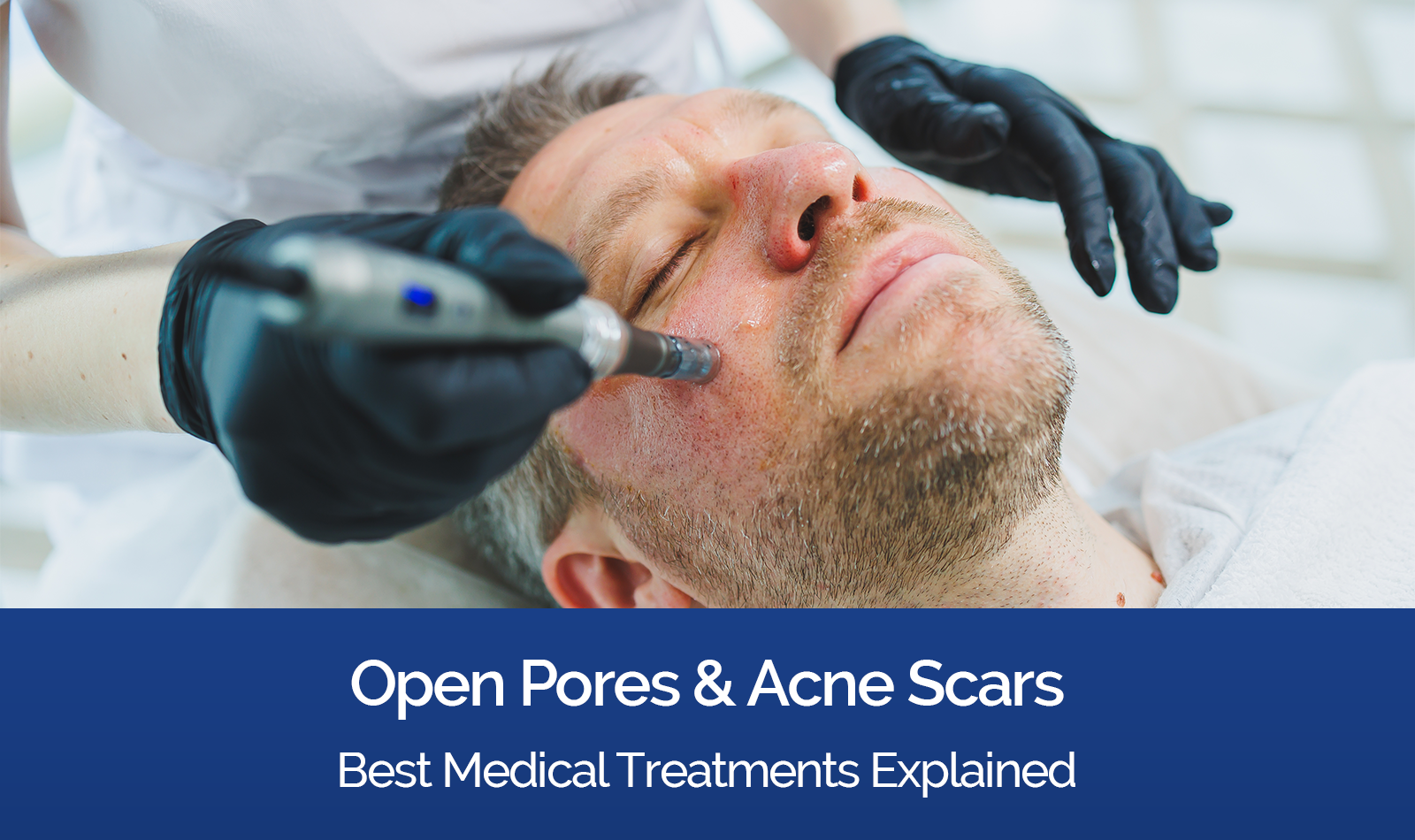
This treatment combines controlled micro injury with thermal energy. Needles deliver RF heat into deeper layers. Collagen remodeling follows. Skin texture improves gradually. This approach suits open pores and rolling scars. Sessions follow a structured schedule with minimal downtime.
Fractional Laser Resurfacing
Laser treatment for acne scars in Karachi remains widely used. Fractional lasers create micro treatment zones while sparing surrounding skin. Healing triggers collagen repair. Non ablative lasers suit moderate texture issues. Ablative lasers address deeper scars with longer recovery. Studies published in 2025 report texture improvement up to sixty percent after full protocols.
Chemical Peels for Surface Refinement
Medical grade peels exfoliate controlled depths. Peels improve tone and mild texture irregularities. Deep scars require combination therapy. Peels support maintenance plans rather than correction alone.
Advanced Treatments for Acne Scars
Subcision
Subcision releases fibrous bands pulling scars downward. A fine instrument breaks these attachments beneath skin. Released areas fill with new collagen. Subcision pairs well with RF or laser sessions for rolling scars.
Platelet-Rich Plasma
PRP uses growth factors derived from blood plasma. Application after procedures speeds healing. Texture improvement improves when PRP supports other treatments. PRP suits patients seeking biologic repair support.
Treatment Selection by Skin Concern
| Skin Concern | Preferred Approach |
| Open pores | Microneedling RF or fractional laser |
| Rolling scars | Subcision with RF support |
| Boxcar scars | Fractional laser protocols |
| Ice pick scars | Focused chemical reconstruction or laser |
| Overall skin texture | Combination medical plan |
Choosing Acne Scars Treatment Karachi Clinics
Device quality influences outcomes. Expertise matters more. Pakistani skin responds strongly to heat and inflammation. Skilled calibration prevents pigment changes. Consultation should include scar mapping and photography. Clear timelines support realistic expectations.
Expert commentary from regional dermatology conferences in 2025 emphasizes individualized protocols rather than single procedure plans.
Recovery, Aftercare, and Safety
Redness and swelling follow most procedures. Recovery length depends on treatment depth. Sun protection remains essential. Dermatologist-guided skincare supports healing. 2026 guidelines stress pigment prevention for South Asian skin tones.
Dr. Fehmida Arif. Clinical Approach
Dr. Fehmida Arif practices evidence based dermatology with focus on acne scars treatment Karachi patients seek. Her clinic evaluates scar type before planning care. Protocols combine laser, microneedling RF, and subcision when required. Emphasis stays on safety and gradual improvement. Further details appear on doctorfehmida.com.
FAQs
1. Do acne scars disappear fully
Improvement progresses over months. Full removal remains unrealistic.
2. How many sessions improve skin texture
Most plans involve three to six sessions.
3. Does laser suit darker skin
Modern systems support darker tones with expert handling.
4. Are results permanent
Results remain stable with acne control and sun care.
5. Does open pores treatment hurt
Topical anesthesia manages discomfort.
Bottom Line
Acne scars treatment Karachi relies on structure focused care rather than surface fixes. Open pores treatment requires collagen support restoration. Laser treatment for acne scars in Karachi delivers visible improvement with expert planning and patience. Medical guidance shapes safe and lasting skin texture results.