
Contents
- 1 Understanding Pigmentation and Melasma
- 2 Why Pakistani Skin Shows More Pigmentation
- 3 Common Types of Pigmentation Seen in Pakistan
- 4 How Pigmentation Develops Inside the Skin
- 5 When to See a Melasma Dermatologist?
- 6 Top Pigmentation Treatment Pakistan Options in 2026
- 7 Pigmentation Types and Common Treatments
- 8 Daily Habits That Influence Pigmentation
- 9 What Not to Do With Pigmentation
- 10 Dr Fehmida and Her Approach to Pigmentation Care
- 11 How Long Pigmentation Treatment Takes
- 12 Emotional Impact of Pigmentation
- 13 Bottom Line
- 14 FAQs
Dark patches on the face or body often raise concern. Many people in Pakistan notice uneven skin tone, brown patches on cheeks, or darker areas around the mouth and forehead. These changes feel frustrating because they appear slowly and fade even slower. Pigmentation and melasma affect confidence and daily choices, from makeup use to sun exposure habits.
This guide explains why pigmentation appears so often in Pakistani skin, how melasma differs from other dark patches skin conditions, and what modern pigmentation treatment Pakistan options look like in 2026. The goal stays simple. You understand what happens in your skin and what steps support steady improvement.
Understanding Pigmentation and Melasma
Pigmentation refers to darkening of skin areas due to excess melanin. Melanin gives skin its color. When melanin production increases in certain zones, patches appear darker than surrounding skin.
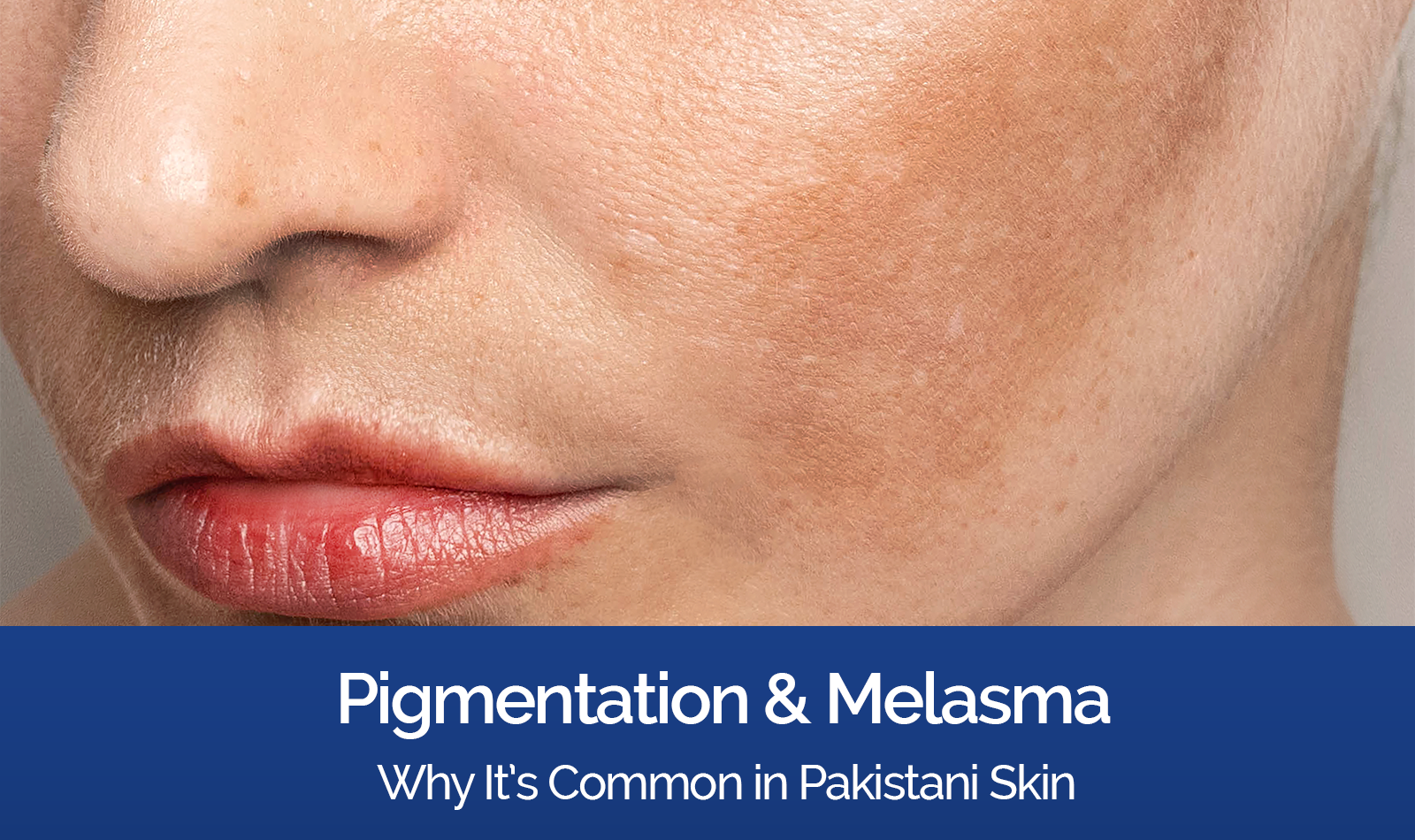
Melasma is a specific type of pigmentation. It usually appears as symmetrical brown or grey brown patches on cheeks, forehead, nose, and upper lip. Sun exposure and hormonal changes influence melasma more strongly than other pigmentation types.
Many people confuse post acne marks with melasma. Acne marks often fade with time. Melasma behaves differently. It persists longer and responds slowly without structured care from a melasma dermatologist.
Why Pakistani Skin Shows More Pigmentation
Skin types common in Pakistan fall between medium to deeper tones. These skin types produce melanin actively as a natural defense against sunlight. High melanin activity protects skin but also increases pigmentation risk when triggered.
Sun exposure plays a major role. Pakistan receives strong sunlight across most months. Ultraviolet rays stimulate melanin production. Without daily sun protection, pigmentation deepens gradually.
Hormonal patterns also influence melasma. Pregnancy, oral contraceptives, and hormonal imbalance increase melanin activity in specific facial zones. Genetics influence how strongly your skin reacts to these triggers.
Environmental factors matter too. Heat, pollution, and dust cause low grade skin inflammation. Over time this inflammation signals pigment cells to increase activity. This explains why dark patches skin appear even without visible injury.
Common Types of Pigmentation Seen in Pakistan
Melasma appears as symmetrical facial patches. It affects women more often than men, though men also experience it.
Post inflammatory pigmentation It appears after acne, burns, or skin irritation. Dark marks remain after healing.
Sun induced pigmentation appears on exposed areas like cheeks, forehead, neck, and hands.
Perioral pigmentation affects skin around the mouth and chin. It often links with hormonal shifts or product misuse.
Each type needs a different approach. A melasma dermatologist identifies the pattern before suggesting treatment.
How Pigmentation Develops Inside the Skin
Pigment cells sit in the deeper layer of skin. When triggered, these cells produce excess melanin. Melanin then moves upward through skin layers and becomes visible as dark patches.
In melasma, pigment spreads across deeper and superficial layers. This depth explains why surface creams alone show limited improvement. Treatment focuses on calming pigment activity and preventing new triggers rather than only lightening existing patches.
Recent dermatology research from 2024 and 2025 shows inflammation and light exposure together worsen melasma. This insight guides newer treatment plans which combine protection, topical care, and procedures.
When to See a Melasma Dermatologist?
- If dark patches persist longer than three months.
- If patches darken despite skincare changes.
- If pigmentation appears during pregnancy or hormonal treatment.
- If over the counter products cause irritation without improvement.
A melasma dermatologist examines depth, pattern, and triggers. This evaluation shapes a realistic treatment plan rather than trial and error.
Top Pigmentation Treatment Pakistan Options in 2026
Treatment focuses on control rather than instant removal. Modern care uses layered strategies.
- Topical treatments include pigment-regulating creams prescribed by dermatologists. These aim to slow melanin production and support even tone.
- Chemical peels help remove superficial pigment layers. Dermatologists select peel strength based on skin type to avoid irritation.
- Laser and light based therapies target deeper pigment layers. These treatments require expertise since incorrect use worsens pigmentation in darker skin types.
- Oral supplements prescribed by doctors support skin health and pigment balance in selected cases.
Strict sun protection forms the base of every plan. Without sun protection, other treatments show limited progress.
Pigmentation Types and Common Treatments
| Type of Pigmentation | Common Areas | Treatment Focus |
| Melasma | Cheeks, forehead, upper lip | Pigment regulation and sun control |
| Post acne marks | Acne prone areas | Topical care and mild peels |
| Sun spots | Face, hands | Peels and laser therapy |
| Hormonal pigmentation | Facial zones | Hormonal review and topical care |
This table shows why diagnosis matters before treatment selection.
Daily Habits That Influence Pigmentation
Daily unprotected sun exposure leads to pigmentation enhancement. A sunscreen suitable for the Pakistani climate becomes a major step. Strong scrubs cause skin irritation and make dark areas worse. Soft washing aids healing. The simultaneous use of several active products generally leads to inflammation. Dermatologists make it easier to manage through routines that run stable. Sleeping patterns and stress factors affect the hormonal balance. Unchangeable habits help skin rejuvenation.
The food you eat is also a factor. The latest researches imply that the intake of foods full of antioxidants is a way to help skin to ward off the development of pigmented areas.
What Not to Do With Pigmentation
- Avoid self-mixing creams or steroid use. These practices worsen melasma over time.
- Avoid frequent product switching. Skin needs consistency.
- Avoid unregulated laser treatments at salons. Inexperienced handling increases pigment depth.
- Avoid believing pigmentation fades quickly. Improvement follows months of structured care.
Dr Fehmida and Her Approach to Pigmentation Care
Dr Fehmida is known for her dermatology practice with focus on pigment disorders and melasma. Her approach centers on detailed skin assessment before treatment. She evaluates pigment depth, lifestyle triggers, and prior product use.
Patients receive step based care plans. These plans focus on stabilizing pigment activity, protecting skin barrier, and improving tone gradually. Her protocols avoid aggressive methods that risk rebound pigmentation. This measured approach supports safer outcomes for Pakistani skin types.
Dr Fehmida also guides patients on long term maintenance, which reduces recurrence risk after improvement.
How Long Pigmentation Treatment Takes
Pigmentation improvement appears gradually. Early changes include reduced darkness and smoother tone. Visible improvement often appears over several months with consistent care.
Melasma requires maintenance. Treatment pauses without sun protection often lead to recurrence. Dermatologists explain maintenance plans clearly to set realistic expectations.
Emotional Impact of Pigmentation
Uneven skin tone affects self-image. Many people avoid photographs or social events due to visible patches. Understanding pigmentation reduces frustration. A clear plan restores control and confidence.
Dermatology care addresses both skin appearance and emotional stress by setting achievable goals and tracking progress.
Bottom Line
Pigmentation and melasma appear frequently in Pakistani skin due to sun exposure, active melanin response, and hormonal patterns. Understanding causes helps you choose effective pigmentation treatment Pakistan options. Dark patches skin conditions respond best to structured care guided by a melasma dermatologist. With realistic timelines, sun protection, and expert guidance such as care provided by Dr Fehmida, steady improvement becomes achievable and sustainable.
FAQs
1. Why melasma affects women more
Hormonal changes influence pigment cells. Pregnancy and hormonal therapy increase risk.
2. Does pigmentation fade on its own
Some marks fade slowly. Melasma often persists without treatment.
3. Are home remedies effective
Home remedies lack controlled strength and often irritate skin. Dermatologist guided care shows safer results.
4. Is laser safe for Pakistani skin
Laser treatment requires expertise. Proper selection and settings reduce risk.
5. Does sunscreen matter indoors
Sunlight reaches skin indoors through windows. Daily use supports pigment control.
6. Can pigmentation return after treatment
Recurrence occurs if triggers persist. Maintenance routines reduce this risk.