
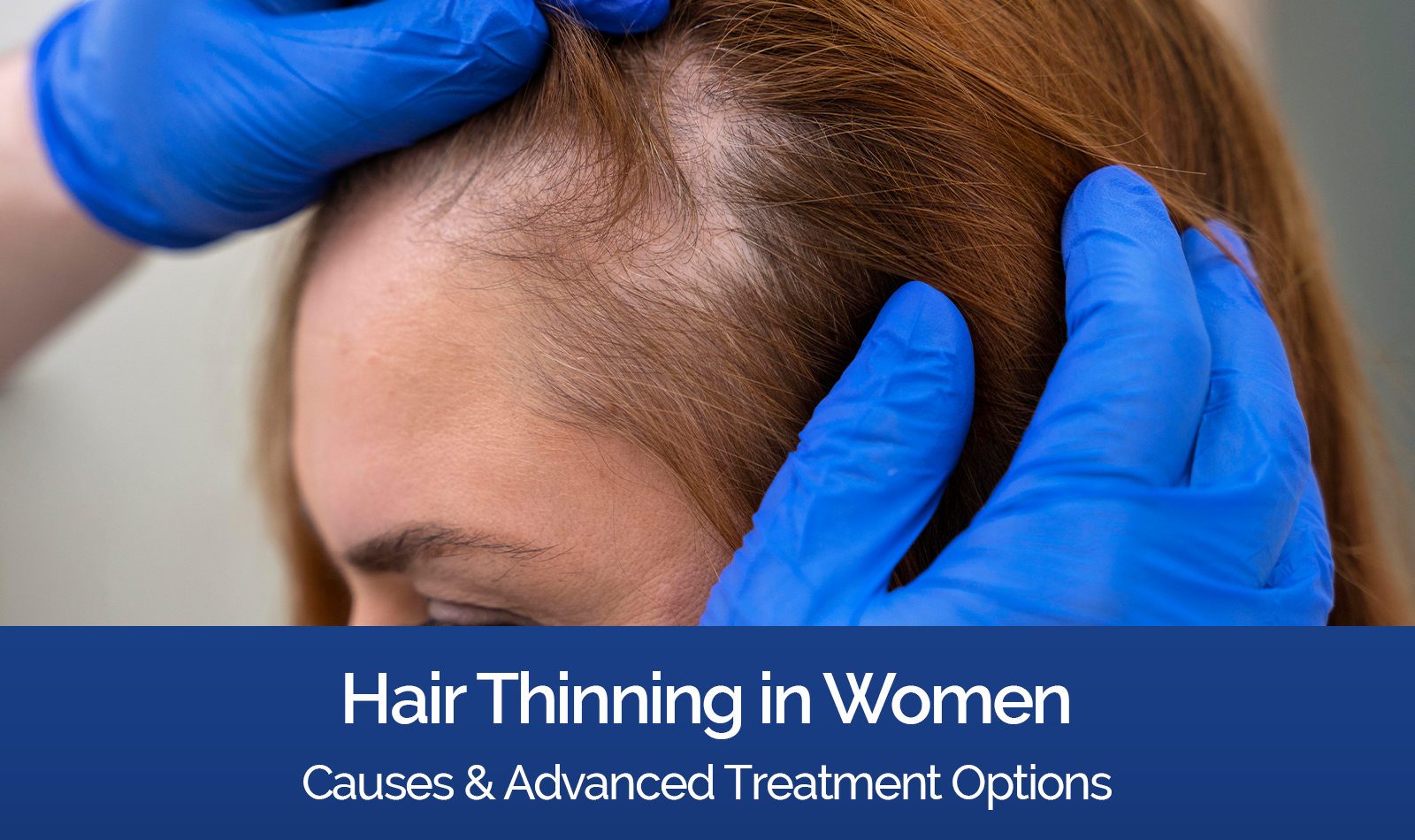
You notice more hair in your brush. Your part looks wider. Your ponytail feels thinner. Hair thinning in women often starts slowly, then becomes hard to ignore.
Many women delay treatment. They try oils, shampoos, or home remedies. When thinning continues, stress increases. The good news is that effective hair thinning treatment for women exists in 2026. But first, you need to understand the cause.
This comprehensive guide explains the root causes of female hair thinning, outlines advanced treatment options backed by medical science, and helps you determine the most effective path toward healthy hair restoration.
Why Hair Thinning Happens in Women
Hair thinning rarely has one single cause. In most cases, several factors work together.
Hormonal imbalance plays a major role. Polycystic ovarian syndrome, thyroid disorders, and menopause affect hair growth cycles. When estrogen drops or androgens rise, follicles shrink.
Genetics also matter. Female pattern hair loss leads to gradual thinning over the crown while maintaining the frontal hairline.
Nutritional deficiencies worsen shedding. Low iron, vitamin D deficiency, and protein deficiency reduce hair strength.
Stress triggers telogen effluvium. In this condition, more hairs enter the shedding phase. According to the American Academy of Dermatology, telogen effluvium often appears two to three months after a physical or emotional stress event.
Understanding the trigger guides the right hair thinning treatment for women.
Early Signs You Should Not Ignore
- Thinning at the part line
- Increased shedding during washing
- Reduced hair volume
- Visible scalp under bright light
Early treatment improves response rates. Waiting for severe thinning reduces options.
Diagnosis Before Treatment
A proper diagnosis requires medical evaluation. Dermatologists assess scalp health, hair density, and hormone profile. Blood tests help identify anemia or thyroid imbalance.
In 2025, clinical reviews published in the Journal of Clinical and Aesthetic Dermatology confirmed that structured evaluation improves long term outcomes in female hair restoration.
Without diagnosis, treatment becomes trial and error.
Hair Thinning Treatment for Women
Treatment depends on cause and severity. Topical minoxidil remains first line therapy for female pattern hair loss. It increases blood flow to follicles and prolongs the growth phase. Oral medications address hormonal imbalance when needed. Dermatologists prescribe them after proper testing.
Advanced therapies provide additional support.
PRP for Hair Loss
PRP for hair loss uses your own platelets to stimulate hair follicles. A small blood sample is processed to concentrate platelets. The doctor injects this plasma into thinning areas.
Platelets release growth factors that support follicle activity. Studies published in 2026 by the International Society of Hair Restoration Surgery report improved hair density in women after three to four PRP sessions spaced one month apart.
PRP works best in early to moderate thinning. Maintenance sessions help sustain results.
Female Hair Restoration Procedures
For advanced thinning, female hair restoration through hair transplant becomes an option. Follicular unit extraction remains the most common technique.
The surgeon transfers healthy follicles from donor areas to thinning zones. Results appear gradually over six to twelve months.
Not every woman qualifies for transplant. Adequate donor density is essential.
Hair Fall Treatment in Karachi
Women seeking hair fall treatment in Karachi have access to modern dermatology clinics offering PRP, medical therapy, and transplant procedures.
Before starting treatment, ask about diagnosis methods, expected timeline, and maintenance plan. Hair regrowth requires patience. Visible improvement often appears after three to six months depending on the method used.
Lifestyle Changes That Support Treatment
- Balanced diet with adequate protein
- Iron rich foods
- Stress management
- Gentle hair care
Aggressive styling and tight hairstyles worsen traction related thinning. Avoid frequent heat exposure.
Dr Fehmida Arif and Hair Thinning Treatment for Women
If you are exploring hair thinning treatment for women in Karachi, consult an experienced dermatologist.
Dr Fehmida Arif offers evaluation and personalized management for female hair loss. Her approach begins with identifying the cause through clinical examination and laboratory testing.
She provides medical therapy, PRP for hair loss, and structured female hair restoration plans when needed. Treatment plans focus on gradual improvement and long term maintenance.
What Results Should You Expect
Hair regrowth takes time. Shedding slows first. Then hair thickness improves gradually. PRP sessions often require three initial treatments followed by maintenance. Medical therapy needs consistent use. Hair transplant results appear over several months as new follicles grow.
Set realistic expectations. Early action delivers better outcomes.
FAQs
1. What is the best hair thinning treatment for women
The best option depends on the cause. Dermatologists often combine medical therapy with PRP for hair loss.
2. Is PRP for hair loss safe
Yes, when performed by trained professionals. The procedure uses your own blood, which reduces allergic risk.
3. How long does female hair restoration take
Visible improvement usually appears after three to six months depending on treatment type.
4. Where can I get hair fall treatment in Karachi
Qualified dermatology clinics in Karachi offer medical therapy, PRP, and transplant options after proper evaluation.
5. Does stress cause permanent hair thinning
Stress related telogen effluvium is often temporary if addressed early.