
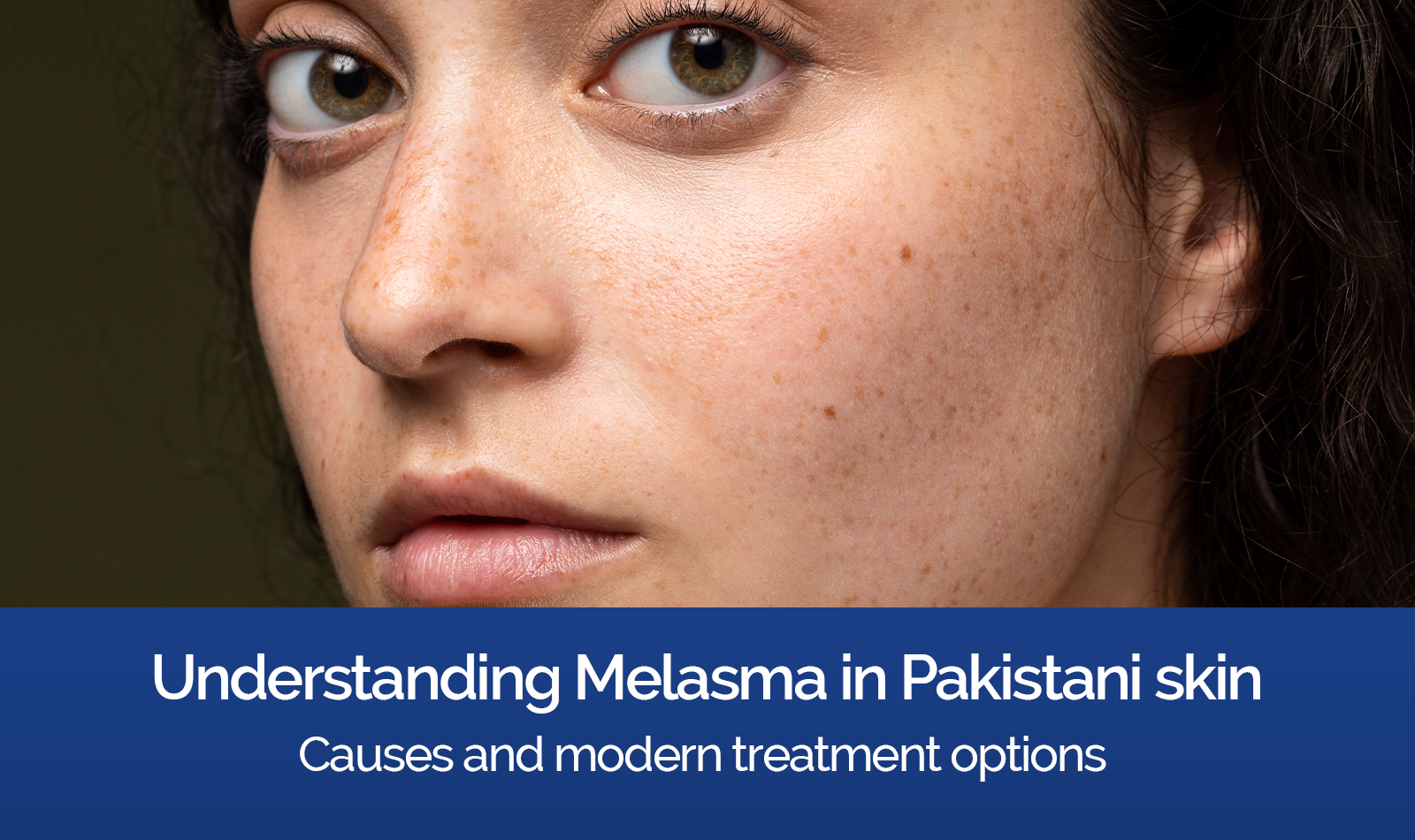
Melasma is one of the most common skin concerns I see in clinical practice, especially among individuals with South Asian skin types. It often appears as brown or greyish patches on the face, usually on the cheeks, forehead, nose, or upper lip. While it is not harmful, it can be frustrating because of how persistent it tends to be. This is why understanding melasma treatment in the right way is important, especially for those looking for effective pigmentation treatment Pakistan.
The key to managing melasma is not just treating it, but understanding why it happens and how to approach it carefully without worsening the condition.
Why Melasma Is Common in Pakistani Skin
Pakistani skin types generally have more active pigment producing cells. This makes the skin more prone to developing pigmentation when exposed to triggers like sunlight, heat, or hormonal changes.
Melasma is not caused by a single factor. It usually develops due to a combination of:
- Sun exposure
- Hormonal fluctuations
- Genetic tendency
- Heat and environmental factors
Because of this, melasma often becomes a long term concern that requires consistent management rather than a quick fix.
What Melasma Looks Like
Melasma typically appears as symmetrical patches on the face. The color may range from light brown to deeper shades, depending on how deep the pigment is in the skin.
One important point patients should understand is that melasma is not just a surface issue. In many cases, the pigment sits deeper in the skin, which is why over the counter products often fail to provide lasting results.
This is where professional melasma treatment in a clinical setting becomes more effective.
Why Treating Melasma Needs a Careful Approach
Many people try to treat melasma aggressively, which can actually make it worse. Overuse of strong products, harsh scrubs, or incorrect treatments can trigger further pigmentation.
In Pakistani skin, the focus should always be on controlled and gradual improvement. The goal is to reduce pigment while protecting the skin barrier.
This is why choosing the right pigmentation treatment Pakistan option is essential. Treatments should be tailored according to skin type, pigment depth, and sensitivity.
Laser for Melasma: Is It Effective?
One commonly discussed option is laser for melasma. Laser treatments can help break down pigment and improve skin clarity when used appropriately.
However, laser is not always the first step. It needs to be carefully selected based on skin condition and performed with controlled settings. When used incorrectly, it can sometimes trigger rebound pigmentation.
When done under proper medical guidance, laser for melasma can be part of a long term treatment plan that improves skin tone gradually and safely.
If you are considering this option, you can explore more about Laser Skin Treatments to understand how different laser technologies are used for pigmentation concerns.
Chemical Peel for Melasma: A Gentle Renewal Option
Another commonly used approach is a chemical peel for melasma. These treatments work by gently exfoliating the upper layers of the skin, helping to reduce pigmentation and improve texture.
A chemical peel for melasma is usually done in controlled sessions rather than one aggressive treatment. This allows gradual improvement while minimizing the risk of irritation.
Peels are often combined with topical treatments and sun protection to maintain results. They are especially helpful for superficial pigmentation and improving overall skin brightness.
You can learn more about Chemical Peel Treatment and how it supports pigmentation management.
The Role of Daily Skincare in Melasma Control
Clinical treatments alone are not enough. Daily skincare plays a major role in managing melasma.
A proper routine should include:
- Consistent sunscreen use
- Gentle cleansing
- Hydration to maintain the skin barrier
- Avoiding unnecessary irritation
Sun protection is especially important because even small amounts of exposure can worsen pigmentation. This is often the reason why melasma returns after treatment if maintenance is not followed.
A Personalized Approach to Pigmentation Treatment
There is no single solution that works for everyone. Some patients respond well to peels, others benefit from laser, and many require a combination approach.
At Dr. Fehmida Aesthetic Clinic, melasma is approached with careful evaluation rather than a one size fits all plan. Treatment decisions are based on skin type, sensitivity, and pigment depth to ensure safe and gradual improvement.
The focus remains on protecting the skin while reducing pigmentation, rather than chasing quick but temporary results.
When to Seek Professional Help
If you notice persistent pigmentation that does not improve with basic skincare, it is best to seek professional advice. Early guidance helps prevent the condition from becoming more stubborn over time.
A proper consultation allows your skin to be assessed accurately and helps determine whether you need topical care, laser for melasma, or a chemical peel for melasma as part of your treatment plan.
Final Thoughts on Managing Melasma
Melasma can be challenging, but it is manageable with the right approach. Understanding your skin, avoiding harsh treatments, and choosing appropriate pigmentation treatment Pakistan options can make a significant difference.
Instead of looking for instant results, focus on consistency and medically guided care. With patience and the right combination of treatments, your skin can gradually become clearer and more even in tone.
Healthy skin is not about perfection. It is about balance, care, and making informed decisions that support your skin in the long run.