
Contents
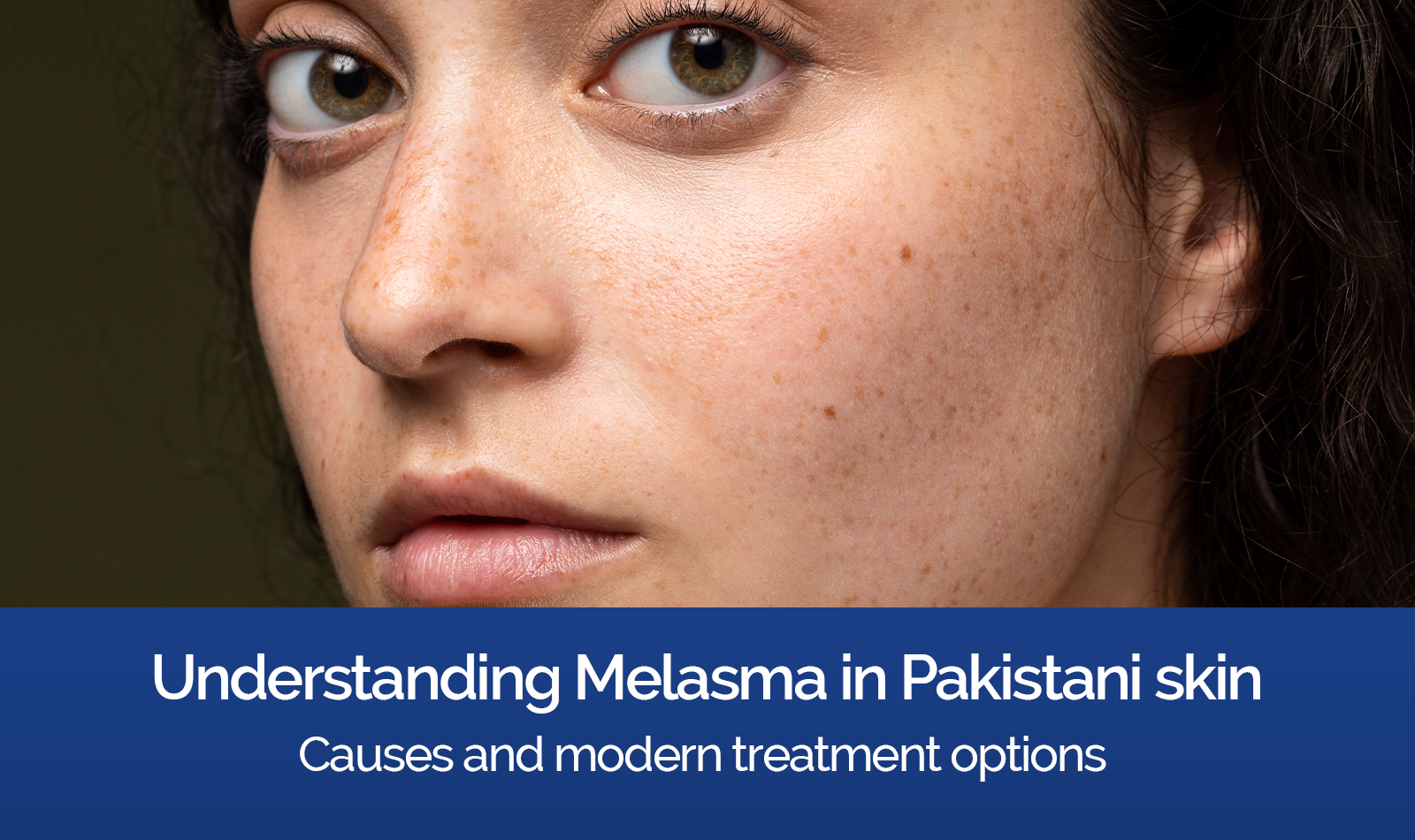
When you look in the mirror and notice brown or grey patches on your cheeks, forehead, or upper lip. At first, they seem mild. Over time, they deepen. You try home remedies. Nothing changes.
Melasma and other forms of pigmentation affect a large number of women in Pakistan. Men face it too, though less often. If you are searching for melasma treatment in Karachi, you need facts before choosing any procedure.
This guide explains why pigmentation develops in Pakistani skin, how you prevent it, and what treatment options work in 2026.
Why Melasma Is Common in Pakistani Skin
Most Pakistani skin falls under Fitzpatrick types III to V. These skin types contain more active melanocytes. Melanocytes produce melanin, the pigment responsible for skin color.
According to the American Academy of Dermatology, melasma appears more frequently in medium to darker skin tones due to higher melanocyte activity.
Karachi and other cities in Pakistan have high UV index levels throughout the year. Ultraviolet radiation stimulates pigment production. Even short daily exposure without sunscreen triggers melasma.
Hormones also drive this condition. Pregnancy, oral contraceptives, and thyroid imbalance increase risk. Dermatology studies published in 2025 in the Journal of Cosmetic Dermatology confirm hormonal shifts combined with sun exposure remain the main triggers in South Asian women.
Common Causes of Pigmentation
Melasma is one type of hyperpigmentation. Others include post inflammatory hyperpigmentation after acne and sun induced spots.
In Pakistani skin, common triggers include prolonged sun exposure, heat, acne inflammation, harsh skincare products, and hormonal changes.
Heat deserves attention. A 2026 clinical review from the International Society of Dermatology highlights that infrared heat exposure worsens melasma by stimulating melanocyte activity. This explains why pigment deepens during hot months even when you avoid direct sun.
How to Prevent Melasma
Prevention requires consistency.
- Use a broad spectrum sunscreen with SPF 50 every day. Reapply if you stay outdoors. Choose mineral or tinted sunscreens if you have sensitive skin.
- Wear protective clothing. Avoid peak sun hours when possible.
- Stick to gentle skincare. Over exfoliation irritates the skin and increases post inflammatory pigmentation.
If you are pregnant or planning pregnancy, consult a dermatologist before starting active treatments. Prevention reduces relapse after pigmentation treatment in Pakistan.
Melasma Treatment in Karachi
Treatment depends on pigment depth. A dermatologist evaluates whether pigment sits in the epidermis, dermis, or both.
Topical therapy remains first line treatment. Doctors often prescribe hydroquinone, retinoids, azelaic acid, or tranexamic acid in controlled combinations. These reduce melanin production and increase cell turnover.
For resistant cases, procedures help.
Laser for melasma targets pigment using controlled light energy. Q switched lasers and low fluence fractional lasers are common choices in Karachi clinics. When performed carefully, laser sessions lighten patches gradually. Aggressive settings worsen pigmentation, especially in darker skin types.
Chemical peel for pigmentation removes superficial pigmented layers. Glycolic acid, salicylic acid, and modified Jessner peels are widely used. Peels require proper spacing between sessions and strict sun protection afterward.
Here is a simple comparison.
- Topical therapy works best for mild to moderate epidermal melasma.
- Chemical peel for pigmentation suits superficial pigment with uneven tone.
- Laser for melasma helps deeper or resistant cases when performed by experienced hands.
Combination therapy often delivers stronger results than a single method.
What Results Should You Expect
Melasma improves with structured treatment. Complete removal is rare. The goal is lightening and long term control. You usually see visible change after eight to twelve weeks of medical therapy. Procedures require multiple sessions.
Maintenance remains essential. Without sunscreen and follow up care, pigment returns.
Dr Fehmida Arif and Advanced Melasma Treatment in Karachi
If you are considering melasma treatment in Karachi, consultation with an experienced dermatologist matters.
Dr Fehmida Arif is a consultant dermatologist known for managing pigmentation disorders in Pakistani skin. Her approach focuses on detailed skin assessment, personalized treatment plans, and gradual correction instead of aggressive procedures.
At her clinic, patients receive evaluation for hormonal triggers, skin sensitivity, and lifestyle factors before starting laser for melasma or chemical peel for pigmentation. This reduces complications and post treatment rebound pigmentation.
When to See a Dermatologist
If your pigmentation spreads quickly, darkens despite home care, or affects your confidence, schedule a consultation.
Avoid unregulated creams containing steroids. Many over the counter products in Pakistan cause skin thinning and rebound pigmentation.
Early medical intervention improves long term outcomes.
FAQs
1. What is the best melasma treatment in Karachi
The best treatment depends on pigment depth and skin type. Dermatologists often combine topical therapy, chemical peel for pigmentation, and laser for melasma.
2. Is laser for melasma safe for Pakistani skin
Yes, when performed by experienced dermatologists using appropriate settings for darker skin tones.
3. How long does pigmentation treatment in Pakistan take
Visible improvement usually appears after two to three months. Maintenance continues long term.
4. Does chemical peel for pigmentation remove melasma permanently
No treatment removes melasma permanently. Peels lighten pigment and improve tone, but sun protection remains essential.
5. Can men develop melasma
Yes. Men in Pakistan also develop melasma, especially with high sun exposure and heat.