
Ask five clinics in Karachi what PRP costs and you will get five very different answers. Some of that is overhead and location, but most of it comes down to what is actually being done: how the plasma is prepared, who injects it, what it is combined with and how many sessions you need. This guide explains what decides the cost of PRP, so you can compare quotes properly and spot the ones that are too good to be true.
Why PRP prices vary so much
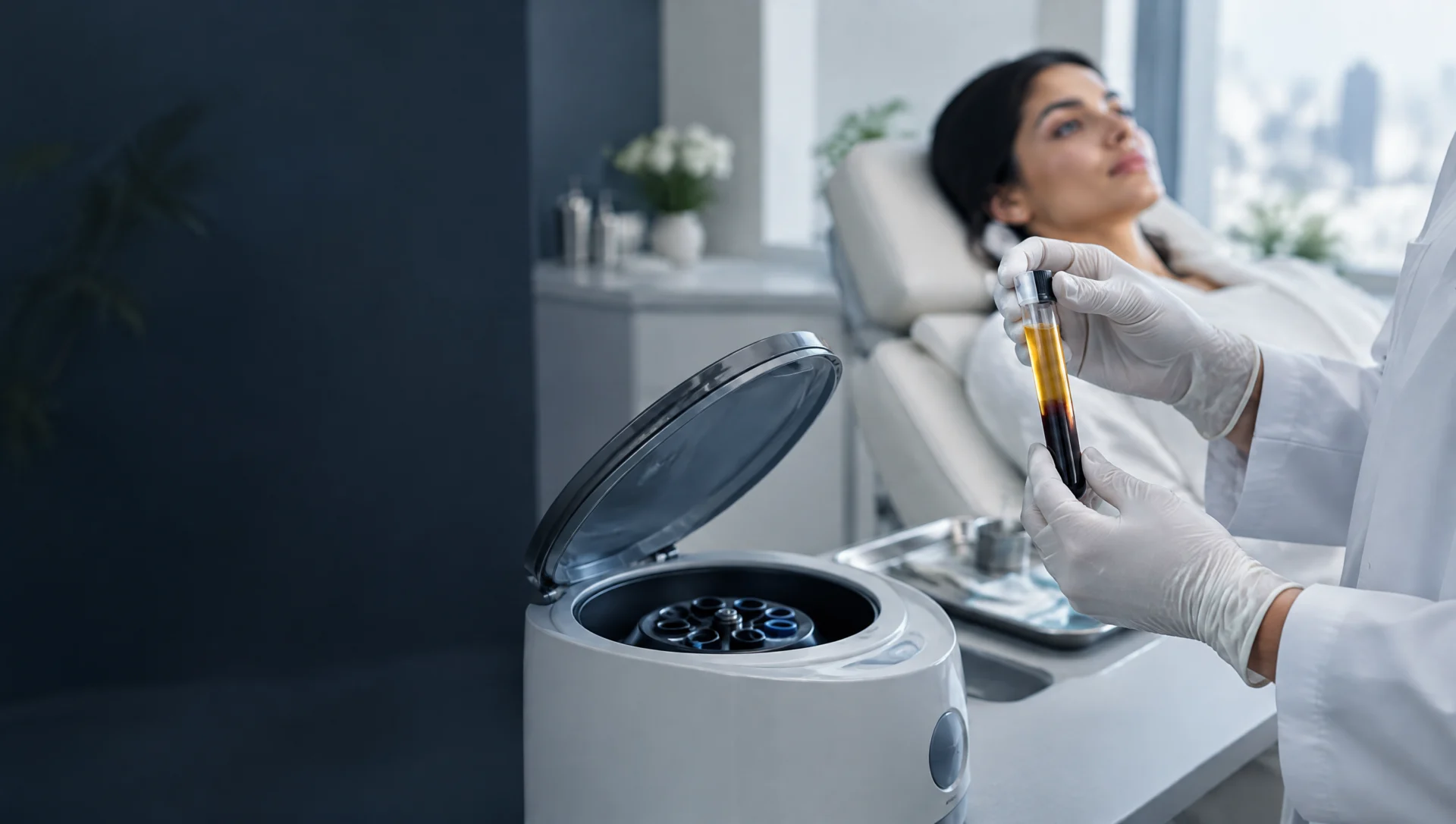
PRP, or platelet-rich plasma, is made from a small sample of your own blood, spun to concentrate the platelets and injected back into the skin or scalp. On paper every clinic offers the same thing. In practice the final plasma can contain very different numbers of platelets depending on the kit and the technique, and that is one of the main reasons some patients see a clear result and others see almost nothing.
What decides the cost of PRP
1. Face or scalp
PRP for the face and PRP for hair use the same principle, but the area treated, the amount of blood drawn and the time taken are different. A full scalp usually needs more plasma than the under-eyes.
2. The kit and how the PRP is prepared
Medical PRP kits are sterile, single-use and designed to separate platelets from red and white cells reliably. Cheaper tubes not designed for PRP produce a weaker concentrate. A closed system, where the blood never touches open air, is safer and more consistent.
3. Who performs it
Drawing blood, preparing the plasma and injecting it into the face or scalp are medical procedures. A treatment planned and performed by a doctor costs more than one delivered by a technician, and it should.
4. What it is combined with
PRP is often applied through microneedling for texture and acne scars, or combined with exosomes or mesotherapy. Each addition changes the price and, when chosen well, the result.
5. The number of sessions
One session of PRP does very little on its own. Most plans are three to four sessions a month apart, followed by maintenance once or twice a year for the face and every four to six months for hair. Compare the cost of the full course, not a single session.
6. Diagnosis before treatment
For hair in particular, a proper assessment and sometimes blood tests for iron, thyroid and hormones come first. It adds to the first visit, but it is what stops you paying for PRP when the real problem is something PRP cannot fix.
Why very cheap PRP is a warning sign
A price far below the rest of the market usually means something has been removed: a weaker preparation, a kit not made for medical use, a non-doctor performing the injections, or a single session sold as if it were a treatment. PRP is only worth paying for when it is prepared and injected properly, so the cheapest option often turns out to be the most expensive one.
Questions to ask when you get a quote
- Which PRP kit do you use, and is it sterile and single-use?
- Who draws the blood and who performs the injections?
- How many sessions will I need, and what does the full course cost?
- Is microneedling, exosomes or anything else included in the price?
- Do I need blood tests or an assessment first, and is that included?
- What results are realistic for me, and when will I see them?
Our guide on how to choose an aesthetic clinic in Karachi covers the wider checks worth making before any treatment.
How PRP is priced at Dr. Fehmida Arif’s clinic
Every PRP plan starts with a consultation with Dr. Fehmida, a consultant dermatologist, who decides whether PRP is right for your skin or hair or whether something else would serve you better. The plasma is prepared in a sterile, single-use closed system and injected by the doctor. You receive a written plan with the number of sessions and the full cost of the course before anything begins. To ask for a quote, message the clinic on WhatsApp.
Frequently asked questions
Is PRP worth the cost?
When it is prepared and injected properly, and used for the right problem, yes. PRP works best for early hair thinning, tired or dull skin and acne scars alongside microneedling. It is not worth paying for when the follicles are gone or when the problem needs volume rather than better skin quality.
Why does PRP for hair need more sessions than people expect?
Hair grows slowly, and PRP works by pushing resting follicles back into their growth phase. A course of three to four sessions followed by maintenance is what produces and keeps visible density.
Does health insurance cover PRP in Pakistan?
PRP for the face or for pattern hair loss is usually treated as cosmetic and is not covered. Check with your insurer if you are unsure.

Consultant Dermatologist and Laser Skin Specialist, MBBS, MCPS. Over 35 years in dermatology, five of them in Zurich, practising in Clifton, Karachi since 1999.
About Dr. Fehmida →