
Chemical Peels in Karachi
Controlled exfoliation by a dermatologist for pigmentation, melasma, acne marks, dull skin and fine lines. The peel and the depth are chosen for your skin.
Is a chemical peel right for me?
- For pigmentation, melasma, acne and acne marks, uneven tone, dull skin, fine lines and rough texture on the face, neck, back or body.
- Twenty to thirty minutes per session; light peels have no downtime, medium peels flake for two to seven days.
- Brighter skin after one session; pigmentation and texture improve over a course of three to six.
A fresh surface, safely.
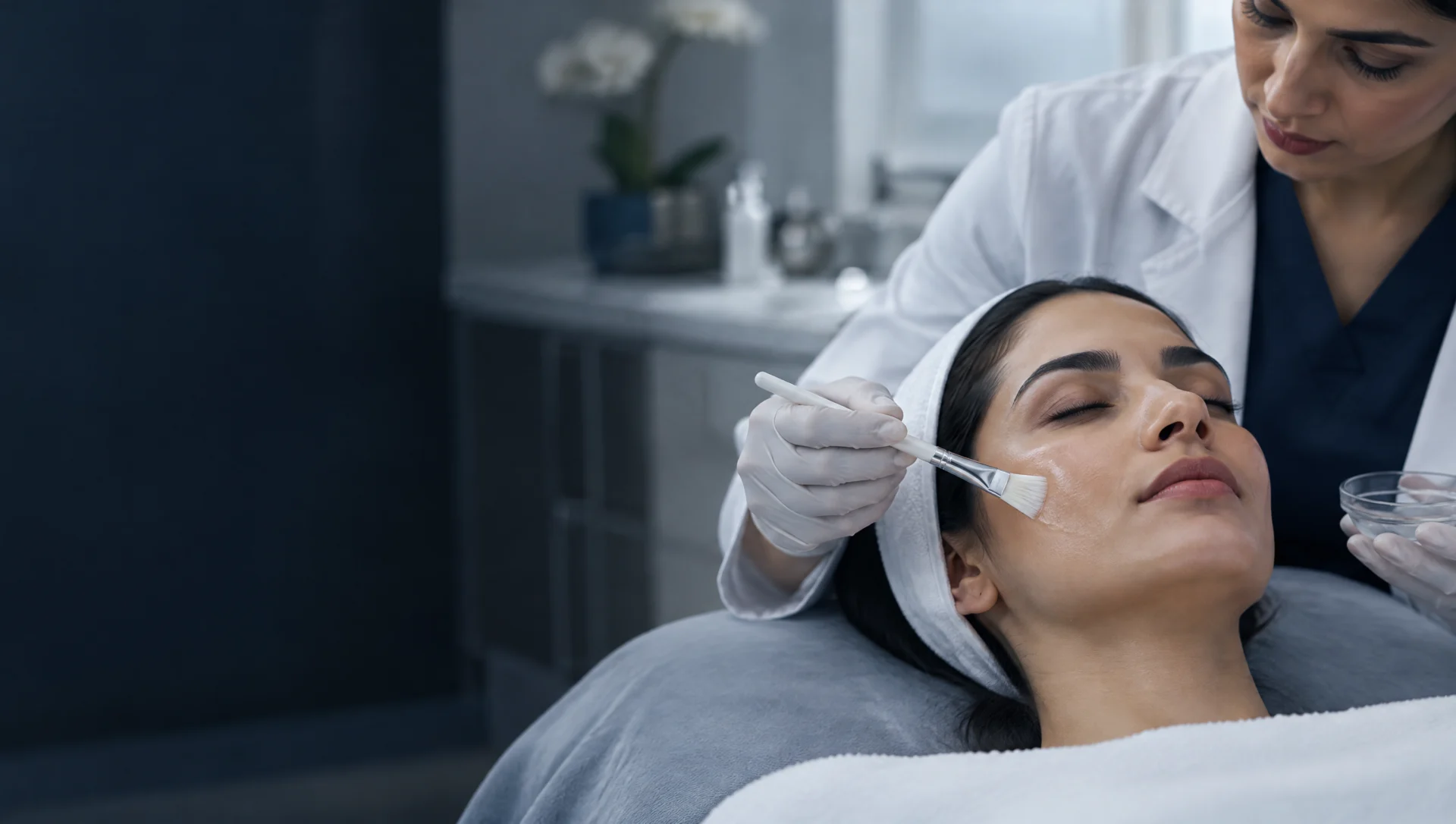
A chemical peel in Karachi at Dr. Fehmida Arif’s clinic removes the damaged outer layers of the skin in a controlled way so that fresher, more even skin replaces them. Done by a dermatologist with the right acid at the right depth, it is one of the most effective treatments for pigmentation, melasma, acne, acne marks, dull skin and fine lines, and one of the safest for brown skin when the peel is chosen correctly.
The clinic uses a range of medical peels: glycolic and lactic for glow and texture, salicylic for acne and oily skin, mandelic for sensitive and darker skin, TCA for deeper pigmentation and scarring, and combination peels such as the Cosmelan and Dermamelan depigmentation protocols for melasma. Dr. Fehmida chooses the peel and the depth for your skin and your concern.
Why preparation matters on brown skin
Most bad peel experiences in Pakistan come from the same two mistakes: a peel that is too strong for the skin type, and no preparation beforehand. Brown skin reacts to injury by making more pigment, so an aggressive peel on unprepared skin can leave darker patches than it started with. Priming the skin with prescription creams for one to two weeks, choosing gentler acids such as mandelic or lactic where needed, and building depth gradually over a course is what makes peels safe and effective here.
Peel or laser?
Peels and lasers often do the same job by different routes, and many plans use both. Peels suit surface pigmentation, acne and dull skin, cost less per session and treat the whole face evenly. Lasers reach deeper pigment and scarring with more precision. Our guide to chemical peels versus laser for pigmentation explains how Dr. Fehmida decides.
Sessions take twenty to thirty minutes, with flaking for two to seven days depending on the depth. A course of three to six, spaced two to four weeks apart, is usual.
The same approach works below the neck. Stronger body peels treat darkened underarms, knees, elbows and inner thighs, and acne and marks on the back and chest. See chemical peels for the body.
Dealing with a tan rather than pigmentation? Read how to fade a tan safely on brown skin.
The right peel for the concern.
Melasma and pigmentation
Depigmentation protocols and TCA or mandelic peels, chosen for brown skin.
Melasma and pigmentation → Concern · acne and scarsAcne and acne marks
Salicylic and combination peels clear active acne and fade marks.
Acne and acne marks → Concern · texture and glowDull skin and fine lines
Glycolic and lactic peels for radiance and smoothness.
Dull skin and fine lines → Concern · textureOpen pores and rough texture
Refines texture over a course.
Open pores and rough texture → Concern · pigmentationChemical peels for the body
Underarms, knees, elbows, back and chest.
Chemical peels for the body → Concern · tired eyesUnder-eye peels
Gentle peels for dark circles.
Under-eye peels →Good candidates
- Pigmentation, melasma or post-acne marks on any skin tone.
- Active acne and oily, congested skin.
- Dull, rough or fine-lined skin that wants a fresh surface.
- Preparation for and maintenance of laser treatments.
Not suitable for
- Isotretinoin in the past six months.
- Active cold sores, infection or open wounds on the area.
- Pregnancy limits the choice of peels; gentle options remain.
- Recent sun exposure or a tan; wait two weeks.
Prepare, apply, renew.
Skin is prepared
Priming creams for one to two weeks, especially on darker skin, reduce the risk of post-peel pigmentation.
The peel is applied
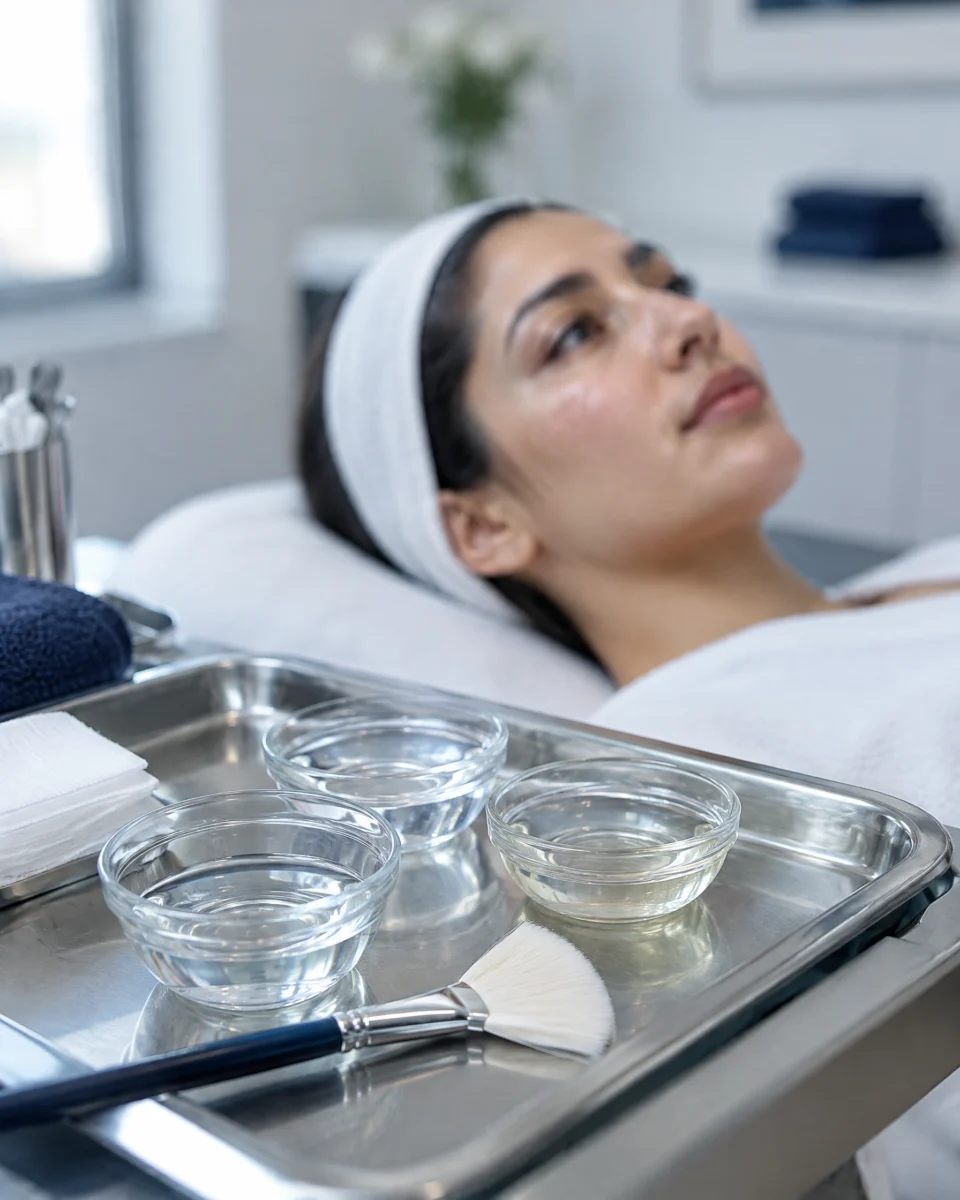
Cleansing, then the acid is applied in layers and timed. A warm tingling for a few minutes; neutralised or self-neutralising.
The skin renews
Over two to seven days the old surface flakes off and fresher skin appears. Sunscreen is non-negotiable.
From consultation to results.
Dr. Fehmida chooses the peel and starts priming if needed.
Twenty to thirty minutes. Pink and tight for the evening.
Do not pick. Moisturise and use SPF 50.
Three to six sessions for pigmentation; then maintenance.

"Brown skin peels beautifully when the peel is chosen with respect for it. The wrong peel, or no preparation, is what gives peels a bad name."
Consultant Dermatologist and Laser Specialist. Over 35 years of dermatology, trained in Zurich, practising in Clifton since 1999. Page medically reviewed September 2026.
Chemical peels, answered.
Straight answers from the clinic. If your question is not here, ask on WhatsApp.
Ask on WhatsAppYes, when chosen and prepared correctly. The clinic uses mandelic, lactic, salicylic and carefully applied TCA peels and primes the skin first to prevent post-inflammatory pigmentation.
Twenty to thirty minutes.
Light peels, none. Medium peels flake for two to seven days, which can be covered with moisturiser and mineral makeup.
A glow after the first session; pigmentation and texture improve over three to six sessions.
Three to six, two to four weeks apart, then a maintenance peel every two to three months.
A warm tingling for a few minutes. Deeper peels feel hotter and are cooled with a fan.
Yes, as part of a plan with depigmentation protocols, sun protection and home care. Melasma is managed, not cured, and peels are one of the main tools.
Yes. Body peels use stronger formulas for darkened underarms, knees, elbows and inner thighs, and for acne and marks on the back and chest. The peel is chosen for the area and the depth of the pigment.
It depends on how deep the pigment sits and on your skin type. Mandelic, lactic and depigmentation protocols such as Cosmelan suit most brown skin with melasma or dark spots, while carefully applied TCA reaches deeper marks. The choice is made at the consultation.
A HydraFacial is a gentle cleanse, exfoliation and hydration with no downtime, ideal for maintenance and events. A medical chemical peel works deeper and treats pigmentation, acne and texture, with some flaking afterwards.
Home peels are weak by design and are fine for mild maintenance. Strong acids used at home without preparation are a common cause of burns and dark patches on brown skin, so deeper peels belong in a clinic.
Sun without SPF 50, picking or peeling the flakes, retinoids and scrubs for about a week, waxing on the area, and heat such as saunas, steam or hard workouts for a day or two.
Light peels, yes, with strict sun protection. Deeper peels are best planned for the cooler months or when you can avoid the sun for a couple of weeks.
Pricing depends on the peel. The clinic shares the exact fee at the consultation. Ask on WhatsApp for current pricing.
Start with a consultation.
A twenty-minute consultation with Dr. Fehmida decides whether this is the right treatment for your face, or whether something gentler or stronger would serve you better. Message on WhatsApp or leave your number and the clinic calls you back.
200/1 Clifton 1, Block 5, Clifton, Karachi. Monday to Friday 9:00 to 6:00, Saturday 9:00 to 5:00.
Call or WhatsApp 0301 827 9630