
Emface works on the muscles and skin, Ultherapy on the deep layer a facelift tightens. A Karachi dermatologist explains which suits you, and when neither does.
Emface and Ultherapy are two of the most asked-about non-surgical lifts, and they are often compared as if they did the same job. They do not. Emface works on the muscles and the skin. Ultherapy works on the deep supporting layer that a surgical facelift tightens. Which one suits you depends on what is actually causing your face to look older, and sometimes the honest answer is neither.
At the clinic: Dr. Fehmida offers both, so the recommendation is based on your face rather than on the machine a clinic happens to own. See Emface, Ultherapy or our page on sagging and loose skin.
How Emface works
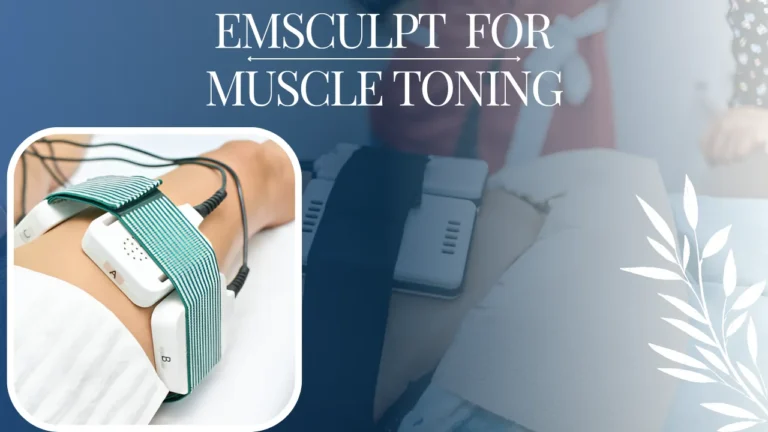
Emface combines two energies in one applicator. Radiofrequency heats the skin to stimulate new collagen and elastin. At the same time, a form of electrical muscle stimulation called HIFES makes the small facial muscles contract thousands of times in a session. Over a course of treatments the muscles that hold up the brow and cheeks become firmer, and the skin over them becomes thicker and smoother.
A session takes about twenty minutes, there are no needles, and you can go straight back to work. Most people have four sessions about a week apart, and results build over the following two to three months.
How Ultherapy works
Ultherapy uses micro-focused ultrasound, guided by a real-time image of the layers under the skin. It delivers tiny points of heat to the deep supportive layer known as the SMAS, the same layer a surgeon tightens in a facelift, as well as to the deeper dermis. The heated tissue contracts and then rebuilds with new collagen.
It is usually a single session of sixty to ninety minutes. It is more uncomfortable than Emface, so we use numbing measures, and there can be mild redness, swelling or tenderness for a few days. The lift develops gradually over two to three months, with the full effect often seen at around six months.
Emface and Ultherapy compared
| Emface | Ultherapy | |
|---|---|---|
| What it targets | Facial muscles and skin quality | The deep SMAS layer and dermis |
| Best for | Early laxity, flat cheeks, heavy brow, forehead lines | Mild to moderate sagging under the jaw, neck and brow |
| Sessions | Usually four, a week apart | Usually one |
| Comfort | Warmth and muscle tapping, no numbing needed | Moments of deep heat, numbing used |
| Downtime | None | Minimal, possible redness or tenderness |
| When results show | Building over two to three months | Building over three to six months |
| Safe for brown skin | Yes | Yes, when settings are chosen carefully |
Which one suits your face?
Emface tends to suit you if your face looks a little tired or flat rather than loose, your brow sits lower than it used to, you have early lines on the forehead, or you want a gradual change with no downtime and no discomfort. It is also a good option for people who are nervous about injections.
Ultherapy tends to suit you if the main change is softening under the jawline, early jowls, a loose neck or a heavy brow, and your skin still has reasonable thickness and elasticity. One session suits people who cannot commit to a course of appointments.
Neither is the right answer if you have a lot of loose, heavy skin. Energy-based treatments tighten and support, but they cannot remove excess skin. In that case a dermatologist should tell you honestly that a laser lift such as Endolift X, a thread lift or a surgical opinion will serve you better.
Can they be combined?
Yes, and for many faces the combination makes more sense than either alone. Ultherapy tightens the deep foundation, while Emface improves the muscle tone and skin on top of it. Dr. Fehmida often pairs energy treatments with skin boosters or careful volume replacement when the cheeks have flattened, because lifting alone does not restore lost volume.
What results to expect
Both treatments give a natural, gradual change rather than a dramatic one. Friends usually say you look rested or well rather than different. Results last around a year for both, and a single maintenance session each year keeps the effect going. Daily sunscreen and not smoking make a real difference to how long the result holds.
How Dr. Fehmida decides
At your consultation Dr. Fehmida looks at your face at rest and in movement, checks skin thickness and elasticity, and asks what bothers you most when you look in the mirror. The plan is built around that, which may mean Emface, Ultherapy, a combination, or a different treatment altogether. Read more about our approach to anti-ageing treatment in Karachi.
Frequently asked questions
Is Emface better than Ultherapy?
Neither is better in general. Emface is better for muscle tone, flat cheeks and early lines. Ultherapy is better for tightening the deep layer under the jaw and neck.
Which is more painful?
Ultherapy. Emface feels like warmth and tapping. Ultherapy has brief moments of deep heat, so numbing measures are used.
How long do the results last?
Around a year for both, depending on your age, skin and sun exposure. Many patients have one maintenance session a year.
Are they safe for brown skin?
Yes. Both work beneath the surface, so the risk of pigmentation is low when the treatment is set up correctly by an experienced team.
Can I have Emface and Ultherapy together?
Yes. They work on different layers, and many patients get the best result from a planned combination.

Consultant Dermatologist and Laser Skin Specialist, MBBS, MCPS. Over 35 years in dermatology, five of them in Zurich, practising in Clifton, Karachi since 1999.
About Dr. Fehmida →